
What Can I Claim for After an Accident in the UK?
14th August 2026
Lost Earnings Injury Claim: What Can You Recover?
18th August 2026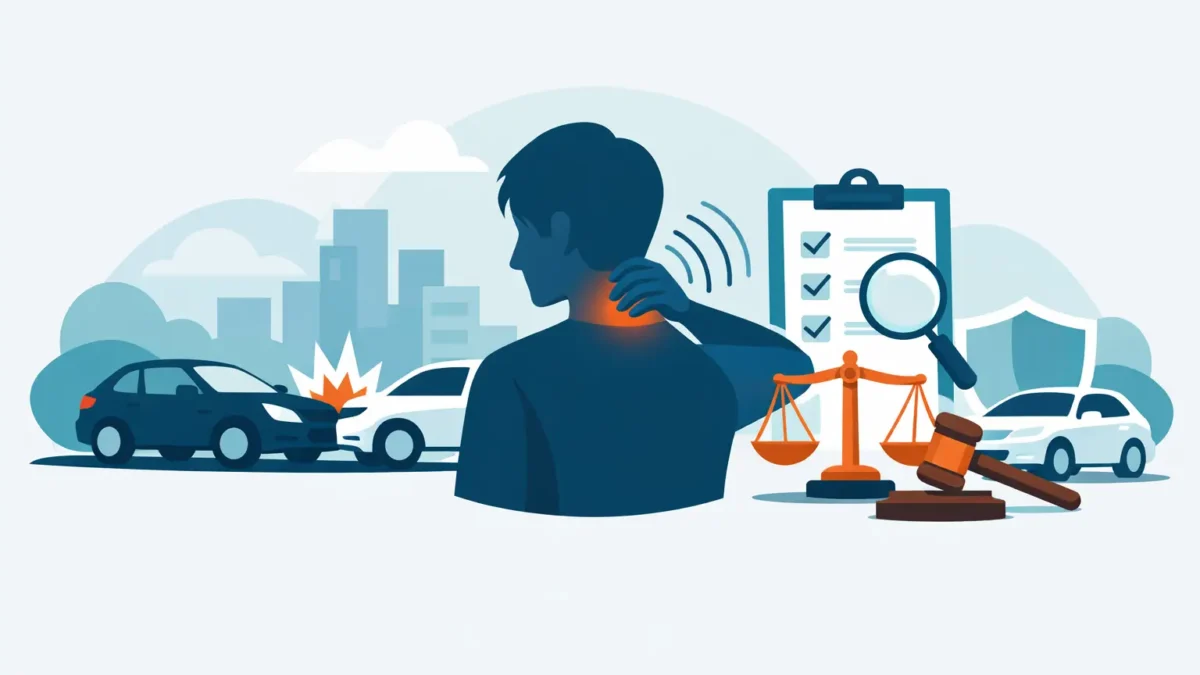
A sore neck can become much more than an inconvenience after a road traffic accident. It can affect sleep, work, childcare, driving and everyday comfort. The whiplash claim rules 2026 are designed to deal with lower-value road traffic injury claims in England and Wales, but they can feel confusing when you are already trying to recover.
The key point is simple: a whiplash injury can still lead to genuine compensation where another road user was at fault. However, the route your claim takes, the evidence you need and the amount awarded may differ from the rules that applied to older accidents.
Who the whiplash rules apply to
The current whiplash framework applies to many road traffic accidents in England and Wales that happened on or after 31 May 2021. It is most likely to affect drivers, passengers, motorcyclists, cyclists and pedestrians injured by the use of a motor vehicle.
For these purposes, whiplash generally means a soft-tissue injury to the neck, back or shoulder. It often follows the sudden movement of the head and body during a collision, including a low-speed impact. Symptoms may include stiffness, headaches, limited movement, pain across the shoulders, dizziness or pain that develops over the following days.
The rules do not apply in the same way across the whole UK. Scotland and Northern Ireland have different legal systems and claims processes. They also do not remove your right to seek compensation simply because an accident seemed minor at the scene. What matters is whether you were injured and whether someone else was responsible.
Why whiplash compensation is different
For qualifying whiplash injuries, compensation for pain, suffering and loss of amenity is usually set by a fixed tariff rather than negotiated in the usual way. The tariff depends mainly on how long the injury lasts and whether it is accompanied by a minor psychological injury, such as travel anxiety.
Tariff figures are reviewed from time to time, so the amount that applies depends on the rules in force for your case. A medical report is needed to establish the injury and expected recovery period. You cannot simply choose a tariff band based on how you feel immediately after the accident.
This approach was introduced to make lower-value claims more predictable and to reduce fraudulent or exaggerated claims. For genuinely injured people, the trade-off is that awards for straightforward whiplash can be lower than they may have been under the previous system. That is why clear medical evidence and proper assessment of every injury matter.
A fixed tariff does not necessarily mean your entire claim is fixed. You may also have losses such as loss of earnings, physiotherapy costs, prescription charges, care costs or travel expenses. These are known as financial losses and should be supported by evidence wherever possible.
The 2026 whiplash claim rules and mixed injuries
Many accidents cause more than whiplash. You might have a fractured wrist, knee injury, concussion, cuts, bruising or a diagnosed psychological condition alongside neck pain. Those injuries do not automatically fall within the whiplash tariff.
Where there is a separate injury, compensation can be assessed for that injury as well as the tariff award for whiplash. The calculation can be more involved than simply adding two figures together, as the overall award must fairly reflect the combined effect of the injuries without compensating the same symptoms twice.
There is also limited scope for a court to increase a tariff award in exceptional circumstances. This is not a routine uplift. It is intended for cases where the effect of the whiplash injury on your life is substantially more serious than the tariff would normally recognise. Strong supporting evidence is essential.
This is one reason not to assume that an online compensation figure tells the full story. A careful review of your diagnosis, symptoms, recovery, work situation and expenses can make a real difference to how your claim is presented.
When the Official Injury Claim process may apply
The Official Injury Claim service is the online route used for many lower-value road traffic injury claims in England and Wales. It is generally relevant if you are aged 18 or over, the value of your injury claim is no more than £5,000, and the total value of the claim is no more than £10,000.
You can start this type of claim yourself, but that does not mean you must handle it alone. Liability may be disputed, insurers may ask questions about the accident, and medical evidence still needs to be arranged. A case may also fall outside the process if the injuries or losses are valued above the relevant limits.
The process is not an automatic payment scheme. You still need to show that another person was at fault, prove your injuries through medical evidence and provide details of any financial losses. If the other insurer disputes responsibility, disputes the medical findings or makes an offer that does not reflect your position, independent legal advice can be particularly helpful.
What to do after a collision
Your health comes first. Seek medical attention if you have pain, stiffness, numbness, headaches or any symptom that concerns you. Some whiplash symptoms take time to appear, so do not dismiss them simply because you felt able to leave the vehicle or continue your journey.
It also helps to keep a clear record from the start. Keep details of the other vehicle and driver, photographs of the scene or damage where safe to take them, witness contact details, medical appointments, receipts and time missed from work. A short diary of symptoms can help show how the injury has affected daily life between appointments.
Be accurate when speaking to insurers and medical professionals. Avoid guessing about recovery times or minimising pain because you do not want to make a fuss. Equally, do not overstate symptoms. A claim is strongest when the account is honest, consistent and backed by evidence.
If your vehicle is damaged or unsafe to drive, practical help with repair or replacement arrangements may also ease some of the pressure while the injury claim is progressing.
Time limits and common concerns
In most personal injury cases, the usual court time limit is three years from the date of the accident. There are exceptions, including claims involving children and people who lack mental capacity, but waiting can make evidence harder to obtain. It is sensible to get advice as soon as you feel able.
You may still be able to claim if you were partly responsible for the accident. For example, if you were not wearing a seatbelt, compensation may be reduced to reflect that contribution, rather than refused altogether. Each case turns on its facts.
You can also claim as a passenger in many circumstances, even where the driver of the vehicle you were travelling in was at fault. The claim would normally be made against the relevant insurance policy, not against a friend or family member personally.
Getting support without upfront legal fees
A no win no fee agreement can make legal support more accessible after an accident, but it is worth understanding the terms before proceeding. Ask what may be deducted from compensation if the claim succeeds, whether insurance is recommended for expenses, and how updates will be provided. Clear answers are part of a fair service.
Claims Specialists UK can help people understand the next step and connect eligible claimants with professional solicitors. The aim is to make the process less daunting while keeping your information confidential and your options clear.
A whiplash injury should not be brushed aside because the accident looked minor or because the rules sound technical. Get medical attention, keep your records and ask for straightforward support early, so you can focus on recovery while your position is properly considered.