

Lost Earnings Injury Claim: What Can You Recover?
18th August 2026
How to Claim for a Slip Injury in the UK
22nd August 2026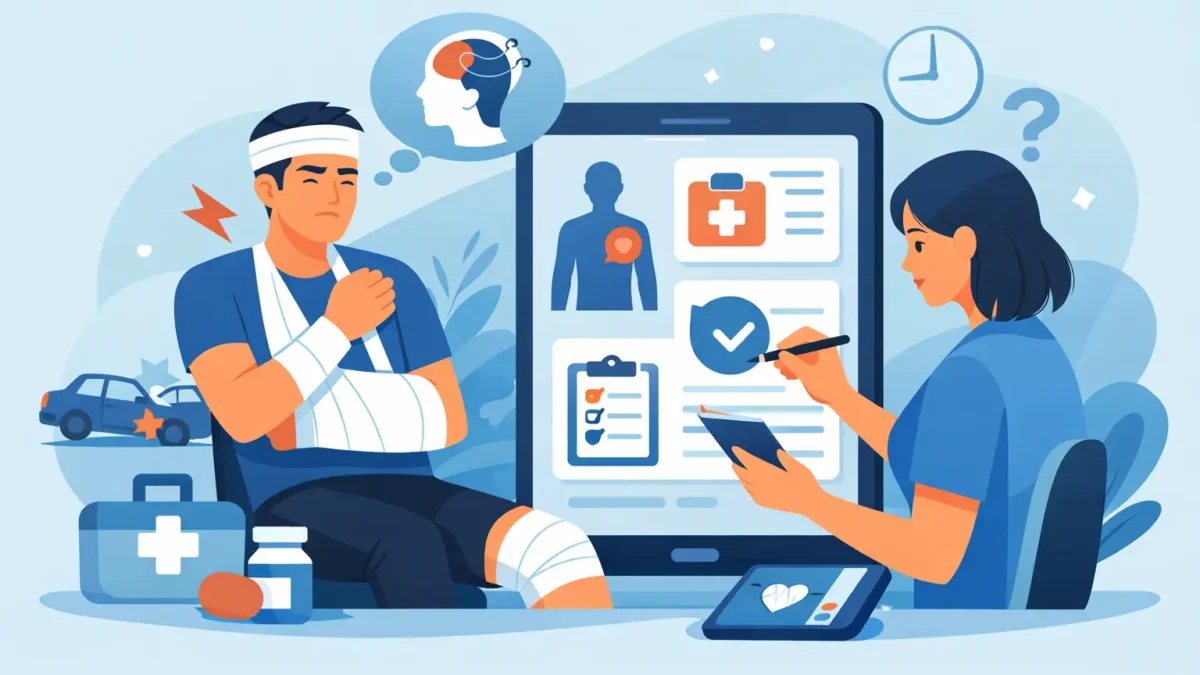
The hours after an accident can feel blurred. You may be arranging repairs, speaking to your employer or insurer, and trying to carry on as normal. Yet recording injury symptoms from the outset can give you a clearer picture of your recovery and provide useful evidence if you decide to make a personal injury claim.
A symptom record is not about exaggerating pain or trying to diagnose yourself. It is simply an honest, dated account of how an injury affects you day to day. When memories fade and symptoms change, those notes can help medical professionals and your solicitor understand what happened.
Why recording injury symptoms matters
Some injuries are obvious straight away. A broken bone, deep cut or severe pain needs urgent medical attention. Others take time to appear. Whiplash, soft tissue injuries, headaches, anxiety, disturbed sleep and back pain may develop over the following hours or days.
A simple record can show the pattern of your symptoms: when they started, whether they became worse, what treatment you received, and how they affected work, travel, sleep or family life. This is helpful because a claim is not based only on the accident itself. It may also consider the pain, treatment, financial losses and practical disruption caused by your injuries.
Medical records remain particularly important. Your own notes do not replace an appointment with a GP, hospital, walk-in centre, physiotherapist or other qualified clinician. However, they can help you explain your symptoms accurately during appointments, especially if your condition changes over time.
Get medical help before focusing on paperwork
Your health comes first. Call 999 or attend A&E if you have serious symptoms such as difficulty breathing, chest pain, heavy bleeding, loss of consciousness, severe head pain, confusion, weakness, or numbness after an accident. If symptoms are less urgent but persist, worsen or worry you, seek medical advice promptly.
Do not assume pain will disappear because the collision, fall or workplace incident seemed minor at the time. Equally, do not delay treatment simply to collect evidence. A medical assessment protects your wellbeing and creates a professional record of the injury and advice given.
Follow the treatment plan you are given, including medication directions, follow-up appointments and rehabilitation recommendations. If something is not helping, or you experience a side effect, tell the clinician treating you rather than changing the plan on your own.
What to include in a symptom diary
You do not need a complicated app or legal language. A notebook, secure phone note or document is enough, provided you keep it private and date each entry. Write little and often. A short, factual note on difficult days is generally more useful than trying to recreate weeks of symptoms later.
For each entry, record the date and time, the symptoms you noticed, and where you felt them. Describe the effect in ordinary terms. For example, you might note that neck pain made it hard to check blind spots while driving, that a wrist injury prevented you from lifting a kettle, or that headaches meant you had to leave work early.
Where relevant, include:
- the intensity of pain, using a simple scale such as 1 to 10;
- activities you could not do, had to reduce, or needed help with;
- sleep problems, fatigue, low mood, worry or flashbacks following the incident;
- medication taken, treatment attended and any advice received;
- time off work, altered duties, cancelled plans or care provided by family and friends.
Try to be specific without guessing. “Pain in lower back after standing for 15 minutes while cooking” is stronger and more useful than “back bad today”. If you have a better day, record that as well. Honest records that reflect improvement, setbacks and ordinary variation are more credible than notes which make every day sound identical.
Keep a record of the practical effects too
An injury can have costs beyond physical discomfort. Keep receipts, invoices and confirmations for expenses connected to the accident, such as prescriptions, parking at medical appointments, taxis where you could not drive, rehabilitation costs or damaged clothing. Keep wage slips and correspondence if you lose earnings or need to change your hours.
For a road traffic accident, it may also help to retain details of vehicle repairs, replacement vehicle arrangements and any communication about the incident. For an accident at work, save accident book details, relevant emails, fit notes and information about adjusted duties. The exact documents needed will depend on your circumstances, but keeping them together early can prevent unnecessary stress later.
Make your notes reliable and private
A diary is most helpful when it is consistent. Set a reminder to update it at the same time each day, or write an entry after a flare-up, appointment or significant change. Avoid editing old entries without making clear when you added new information. If you remember something later, create a fresh dated note explaining that it relates to an earlier event.
Store your records securely. Your symptoms and medical information are private, so use a password-protected device or keep paper notes somewhere safe. Back up photographs of visible injuries, bruising, swelling, mobility aids or damaged personal items, but do not alter the images. Keep the original files where possible, as they may retain useful date information.
Social media deserves caution. A single photograph from a family event rarely tells the full story of an injury, but posts can be misunderstood. You do not need to stop living your life or avoid seeing people. Just think before posting and avoid statements that conflict with the symptoms you are reporting.
How symptom records may support a claim
If you choose to pursue compensation, a solicitor will usually look at several sources of evidence. These can include medical records, an independent medical assessment, accident reports, witness information, photographs, financial documents and your account of what happened. Your symptom diary is one part of that wider picture.
It can help explain matters that a medical note may not capture in detail, such as being unable to lift your child, missing a planned holiday, struggling to use public transport, or relying on someone else for shopping and cleaning. These details can be relevant when assessing the impact an injury has had on your life.
That said, a diary cannot prove every point by itself. The strength of a claim depends on the facts, including who was responsible, the available evidence and the medical opinion on your injuries. It is better to provide accurate information, even where there are gaps or uncertainties, than to try to make records say more than they can.
In many personal injury cases, there is usually a time limit for starting a claim. In England and Wales, this is commonly three years from the date of the accident or injury, although exceptions can apply. Getting early advice can help you understand the relevant deadline and preserve evidence while it is still available.
When to speak to a claims specialist
You do not have to decide immediately whether you want to claim. But if another person, business, road user or organisation may have been responsible for your injury, early guidance can make the next steps easier. A claims specialist can listen to what happened, explain whether a no win no fee solicitor referral may be appropriate, and help you understand the information likely to be needed.
Claims Specialists UK supports injured people through a straightforward process, with clear communication and access to professional legal support. There is no need to have a perfectly organised file before asking for help. Bring what you have, including your symptom notes, medical details and any accident evidence, and be open about what you do not yet know.
Your record does not need to be perfect to be worthwhile. Start with today: write down how you feel, what you could not manage, and any treatment or support you needed. That small step can make your recovery easier to explain when you need care, reassurance or advice.