
What the Whiplash Claim Rules 2026 Mean
16th August 2026
Recording Injury Symptoms After an Accident
20th August 2026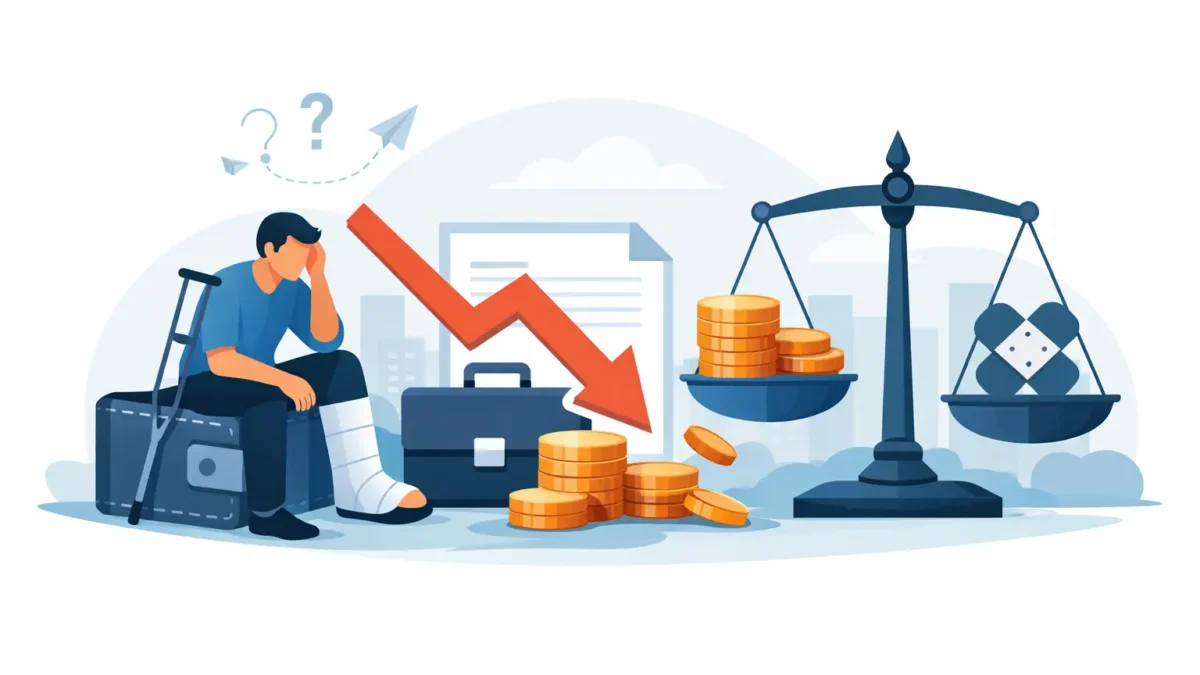
Missing work after an accident can put pressure on every part of life, from rent and household bills to childcare and travel costs. A lost earnings injury claim may help you recover income you have missed because another person or organisation was responsible for your injury.
This part of a personal injury claim is often called a financial loss or special damages claim. It sits alongside compensation for the injury itself. The aim is not to provide a windfall. It is to put you, as far as money can, in the financial position you would have been in if the accident had not happened.
What is included in a lost earnings injury claim?
Lost earnings can cover more than the wages missing from your latest payslip. The right amount depends on your job, how long your recovery takes and the evidence available to show what you have lost.
For an employee, a claim may include net pay not received while off work, including regular overtime, commission, bonuses and shift allowances where these can be shown. If you used annual leave to avoid losing pay while recovering, this may also be relevant. Your solicitor can look at whether the value of that leave should form part of the claim.
A successful claim may also account for pension contributions, workplace benefits and promotion opportunities lost because of the injury. These issues can matter where time away from work was lengthy or your condition has changed the type of work you can reasonably do.
Your employer may have paid statutory sick pay, contractual sick pay or full pay for a period. That does not automatically mean there is no financial loss to discuss. The position can be more complex, as employers and government bodies may be entitled to recover certain payments from compensation. A solicitor can explain how this affects the figures in your individual case.
Past and future loss of earnings
Income already missed
Past loss of earnings is usually the more straightforward part of the calculation. It covers income lost from the date of the accident to the date the claim settles or reaches court. Payslips, bank statements and a letter from your employer can help establish your normal earnings and the amount actually received during your absence.
The calculation normally looks at net pay, meaning the money you would have taken home after tax and National Insurance. Where your income varies, such as through overtime or commission, earnings over a sensible period before the accident may be used to identify a fair average.
Income you may lose in the future
Future loss may apply when medical evidence shows that your injury is likely to affect your ability to work, reduce your hours or limit career options. For example, a warehouse worker with a serious back injury may be unable to return to heavy lifting, or a taxi driver with ongoing pain may need to work fewer hours.
These claims need careful evidence. The court will consider medical prognosis, your employment history, qualifications, age and the availability of suitable alternative work. Future losses can be significant, but they are not assumed simply because an injury is serious. They must be supported by the facts of your situation.
If you are self-employed
Being self-employed should not prevent you from claiming lost income, but proving the loss can take more detail. A fall in business turnover is not always the same as a loss of personal earnings. Your claim may need to show work you could not complete, contracts you lost, paid help you had to bring in, or profits that were reasonably expected.
Accounts, tax returns, invoices, booking records and correspondence with customers can all be useful. If your business was already quiet before the accident, or other market conditions affected income, the calculation may need to separate those factors fairly.
Evidence for a lost earnings injury claim
Good records can make the claims process clearer and reduce delays. Keep copies rather than handing over original documents, and make a note of dates while events are still fresh.
Useful evidence often includes:
- payslips from before and after the accident;
- P60s, employment contracts and letters confirming your pay and absence;
- bank statements showing wages or sick pay received;
- fit notes, medical records and evidence of treatment; and
- for self-employed people, accounts, invoices, tax returns and cancelled work.
You may also need evidence of the accident itself and why someone else was responsible. In a road traffic accident, this could include accident details and insurer information. After an accident at work, it may include an accident book entry, photographs, witness details or health and safety records. For slips and trips, prompt reporting and photographs of the hazard can be particularly helpful.
Do not worry if you do not have every document at the outset. A solicitor can advise what is needed and may request relevant information from your employer or other parties. What matters is being open about your work pattern, income and any sickness absence that existed before the accident.
How is the amount worked out?
There is no single standard payment for lost earnings. A person who misses two weeks of fixed salary will have a very different claim from someone whose long-term injury ends a physically demanding career.
The starting point is usually your likely earnings without the accident, less income you actually received or could reasonably have earned elsewhere. You are expected to take sensible steps to reduce your losses where possible, such as following medical advice and considering suitable alternative duties if they are offered. This does not mean you should return to work before you are medically ready or accept work that worsens your condition.
A medical report is central to this process. It helps establish how the injury affected you, your likely recovery period and whether there are ongoing work restrictions. In more complicated cases, an employment, rehabilitation or financial expert may be needed to assess future loss accurately.
Practical steps after an injury affects your work
Tell your employer about the accident and absence as soon as you can, following their usual reporting procedure. Ask for written confirmation of your dates off, normal pay, sick pay and any reduced hours. If you are able to do some work but not your usual role, keep records of the duties you carried out and the hours you missed.
Keep attending medical appointments and follow treatment advice. A gap in treatment is not automatically a problem, but insurers may ask why it happened if the injury is said to have prevented you from working. Clear records give a fuller picture of your recovery.
Avoid agreeing a final settlement before you understand the longer-term impact of your injury. An early offer may appear helpful when money is tight, yet it may not reflect future earnings, treatment needs or the effect on your career. Once a claim is settled, you cannot normally return for more compensation because your condition lasted longer than expected.
No win no fee arrangements can make legal advice more accessible when you are worried about costs. The terms vary, so make sure you understand any success fee, insurance arrangements and deductions that could apply if the case succeeds. Claims Specialists UK can help connect eligible claimants with professional solicitor support and explain the next steps in plain English.
Do not leave it too late to seek advice
For many personal injury claims in England and Wales, the usual court time limit is three years from the accident date or from the date you first became aware that an injury was linked to negligence. There are exceptions, including claims involving children, people without mental capacity and some cases of medical negligence.
It is usually better to get advice well before the deadline. Evidence can disappear, witnesses can become harder to contact and payroll records may take time to obtain. Starting early also gives your solicitor time to understand whether your injury may affect future work.
If an accident has left you struggling to earn, clear information and early support can ease some of the immediate uncertainty. Keep your records, focus on your recovery and ask for advice before accepting less than your financial loss may genuinely be worth.